

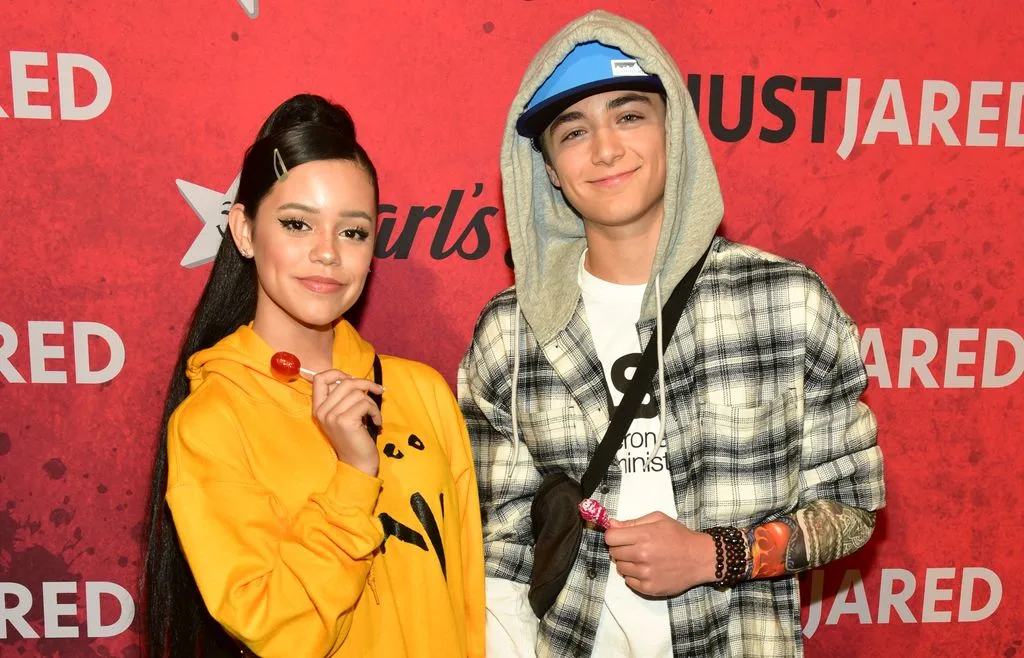

Jenna Ortega boyfriend news is a textbook example of how fast modern rumor engines can spin up a story from almost nothing. Across social feeds and celebrity blogs, speculative pairings and doctored images have tried to fill the vacuum left by her deliberate silence on her love life. From a business-leadership lens, her situation is less about romance and more about the mechanics of misinformation, brand safety, and long-term trust with a young, highly engaged audience.
Publicly available reporting is consistent on one key point: Jenna Ortega is not in a confirmed relationship and has been explicit that she does not plan to talk about her love life. She has even called some of the more extreme rumors, including being linked to much older, high-profile figures, “pretty hilarious,” making clear she has never met certain people she has been paired with online. The reality is that the gap between verifiable facts and viral narratives has rarely been so wide.
How False Dating Narratives Gain Traction In Attention Cycles
In one widely discussed example, Jenna Ortega was suddenly rumored to be dating basketball player Devin Booker after what appeared to be images of them on a dinner outing circulated online. Those photos were later exposed as manipulated, yet the story still spread for weeks across social media, meme pages, and lower-tier entertainment outlets. It is a classic case of the image-first, verification-later dynamic that now dominates large portions of digital culture.
What I’ve seen repeatedly is that once a visual “proof” asset exists—even if it is fake—the effort required to debunk it rarely catches up with the speed of initial distribution. In Ortega’s case, fans quickly called out the editing, but the rumor continued to live on in reposts and out-of-context mentions. From a practical standpoint, this shows how fragile reputational control becomes when anyone can fabricate scenes that look plausibly real.
Public Statements, Non-Disclosure, And Narrative Control Signals
Jenna Ortega has made a strategic decision not to speak publicly about her romantic life, stating that her love life is hers and that she does not plan to discuss it in interviews. This is a clear boundary-setting move, signaling that relationship questions are off the table even as her profile rises through major streaming projects and film roles. It is a similar play to what some activists and executives adopt: high visibility in work, minimal commentary on private intimacy.
From a practical standpoint, refusing to engage with dating rumors removes oxygen from the most speculative content. Without quotes, confirmations, or shared couple content, unverified claims remain exactly that—rumors that cannot be cleanly upgraded into “official news.” The trade-off is that silence does not stop the rumors entirely, but it prevents them from becoming a structured, ongoing storyline that the media can reliably monetize.
Reputational Risk, Young Audiences, And Platform Responsibility Context
Jenna Ortega’s fan base skews young and digitally native, which changes the reputational risk profile of boyfriend news around her. For this demographic, parasocial connection is intense, and relationship speculation often feeds directly into fan wars, ship culture, and polarized commentary that can quickly deteriorate into harassment. In that environment, every rumor carries a multiplier effect across stan accounts, edit videos, and algorithmic recommendations.
From a leadership perspective, the smarter play is exactly what Ortega appears to be doing: limit fuel, maintain a clean separation between professional persona and private romance, and keep communications focused on work, values, and craft. The 80/20 rule applies again—if at least 80% of her visible output centers on projects, collaborations, and creative process, then any 20% of noise around dating remains peripheral rather than defining.
False Images, Confirmation Bias, And The Cost Of Clarifying
The manipulated photos that linked Jenna Ortega to Devin Booker show how confirmation bias operates: audiences primed to expect celebrity pairings often accept visuals that match their assumptions without deeper scrutiny. Once the storyline exists—“young rising star with established athlete”—subsequent content tends to reinforce it, even as corrections emerge. The platform architecture rewards early engagement, not late-stage fact-checking.
The data tells us that clarifications, denials, and corrections almost always underperform the original, misleading claim in reach and engagement. In Ortega’s case, her dismissive response to a separate, high-profile rumor did help reset expectations, but it did not fully erase the narrative threads already in circulation. From a practical standpoint, this reinforces why proactive boundary-setting and minimal initial leakage of private details are often more effective than trying to fix misperceptions after the fact.
What Brands Can Learn From Jenna Ortega’s Boyfriend Rumor Playbook
Look, the bottom line is that Jenna Ortega’s handling of boyfriend news offers a sharp lesson for any brand or public figure operating in a rumor-prone environment. First, do not feed unverified narratives; once you start clarifying every claim, you validate the frame and invite more speculative coverage. Second, make a clear policy choice—no commentary on private relationships—and apply it consistently so audiences and media eventually treat that boundary as stable.
From a practical standpoint, the winning move is to redirect attention back to verified work, values, and output while allowing obviously false rumor cycles to burn out under their own lack of credible fuel. Jenna Ortega’s current stance—no confirmed boyfriend, limited personal disclosure, and occasional, pointed dismissals of extreme claims—shows that in an economy built on speculation, choosing not to play the game can itself be a powerful, long-term strategy.