

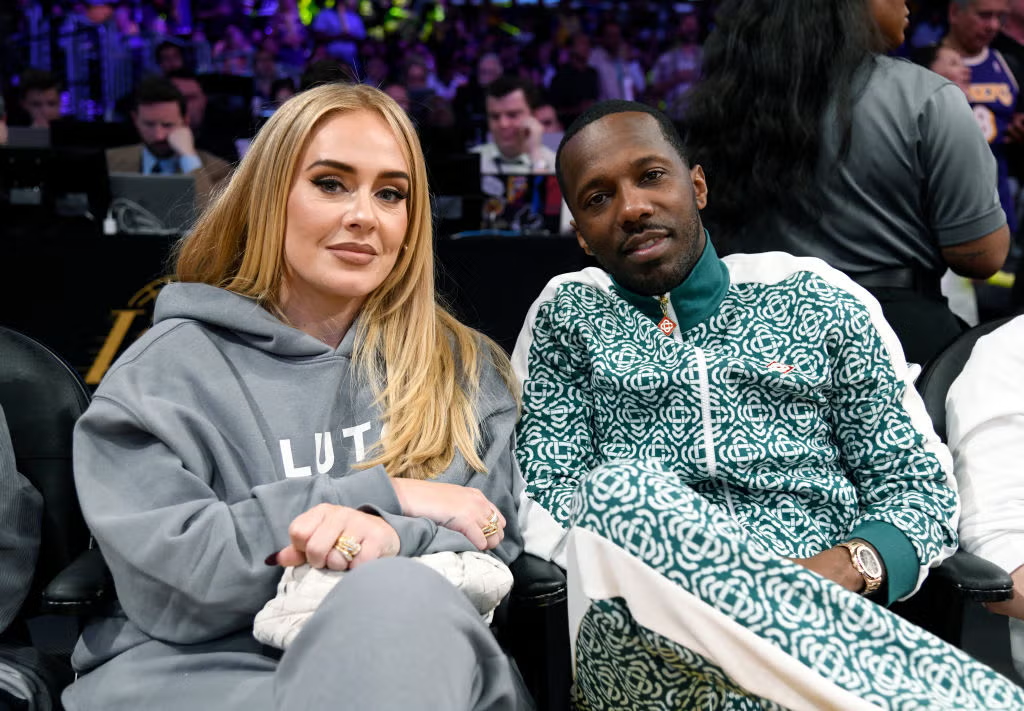

The search term “Adele boyfriend news” continues to generate significant digital traffic, not because the story keeps changing, but because the public wants confirmation on what’s already widely reported. Adele has been with sports agent Rich Paul since mid-2021, confirmed their engagement publicly, and sources suggest they may have already married in private. What’s actually worth examining here is why relationship updates from established couples still drive search behavior, and what that reveals about how celebrity narratives get consumed in cycles.
The reality is this: when someone types “Adele boyfriend news,” they’re rarely looking for breaking developments. They’re seeking confirmation, context, or the latest public appearance that validates what’s already in motion. The data tells us that stable relationships generate just as much curiosity as turbulent ones, just with different intent behind the clicks.
The Signals Behind Stability And Why It Still Drives Traffic
Adele and Rich Paul first went public at an NBA Finals game, a move that instantly positioned their relationship within sports and entertainment crossover media. That wasn’t accidental. Paul is one of the most influential agents in professional basketball, representing LeBron James among others, and Adele’s brand operates at the intersection of music credibility and mass appeal.
What I’ve learned is that stable, high-profile couples don’t disappear from search trends. They shift into a different phase of public engagement where each appearance becomes a data point confirming continuity. The marketplace for celebrity news doesn’t just crave drama; it craves updates that either validate or challenge existing narratives.
From a practical standpoint, the couple’s decision to keep a relatively low profile after Adele’s extended Las Vegas residency ended means that any public sighting or statement carries amplified weight. Scarcity drives value, and when someone at Adele’s level of fame selectively shares relationship details, each disclosure becomes a mini-event that resets the news cycle.
Engagement Confirmation And The Pressure Of Public Timing
Adele confirmed her engagement during a concert in Germany, responding to a fan’s marriage proposal with a raised hand and the words, “I can’t marry you because I’m already getting married”. That’s textbook narrative control. She didn’t issue a statement through representatives or stage a magazine exclusive. She chose the moment, the setting, and the framing.
Look, the bottom line is this: celebrities of Adele’s stature understand that withholding information creates speculation, and strategic disclosure manages it. The engagement had been rumored for months based on ring sightings and offhand comments during her Las Vegas shows where she referred to Paul as her “husband”. By confirming it herself in a casual, fan-facing moment, she controlled both the message and the emotional tone.
The timing also mattered. Germany, not Las Vegas or Los Angeles. A concert, not a press junket. The European leg of her tour provided distance from the tabloid-heavy environments of the UK and US markets, allowing the news to spread organically through fan-captured video rather than coordinated media rollout.
Private Relationships And The Reality Of Speculation Cycles
Reports have circulated that Adele and Rich Paul may have already married in secret, though neither has confirmed this directly. What actually works here is ambiguity managed with intention. If they are married, keeping it private allows them to avoid the public scrutiny that often accompanies high-profile weddings. If they aren’t, the speculation maintains interest without requiring any effort on their part.
Here’s what actually works in practice: when a celebrity couple maintains strong boundaries around their private life while selectively sharing moments, they create a dynamic where the audience fills in gaps with optimism rather than cynicism. Adele has been vocal about wanting her son to see her in a healthy, loving relationship, and that framing shifts public perception away from tabloid gossip toward something more aspirational.
The 80/20 rule applies here, but inverted. They share roughly 20 percent of their relationship publicly, enough to satisfy curiosity and generate positive media coverage, while keeping 80 percent entirely private. That balance protects intimacy while still feeding the attention economy that sustains celebrity brand value.
Narrative Shifts And What Sustained Happiness Actually Signals
Adele’s relationship with Rich Paul marks a significant departure from her previous marriage, which she has described as unfulfilling despite neither party doing anything explicitly wrong. That honesty recalibrates how audiences interpret her current relationship. Instead of viewing it through the lens of scandal or rebound, the narrative becomes one of intentional choice and emotional growth.
From a reputational standpoint, this is high-value positioning. Adele isn’t framed as someone who left chaos for stability; she’s positioned as someone who chose authenticity over inertia. That distinction matters in how her music, her public statements, and her personal brand are received. Her audience isn’t just buying albums; they’re investing in a story arc where vulnerability leads to clarity.
I’ve seen this play out across industries: the brands that win long-term aren’t the ones with perfect stories, but the ones that manage transitions with transparency and consistency. Adele’s willingness to discuss why her previous marriage didn’t work, paired with visible happiness in her current relationship, creates a narrative loop that reinforces credibility rather than undermining it.
Attention Economics And Why Established Couples Remain Searchable
The continued search volume around “Adele boyfriend news” reflects something fundamental about how celebrity information gets consumed. People don’t just search when something breaks; they search to confirm, to update, and to participate in a shared understanding of a public figure’s life. Established relationships generate recurring search behavior because fans want to see evidence of ongoing happiness, not just initial announcements.
What the data tells us is that positive relationship narratives have staying power when they’re paired with career success and selective visibility. Adele’s break from performing has amplified interest in her personal life because professional updates are temporarily sparse. The audience shifts focus to what’s available, and in this case, that’s relationship milestones and the occasional public appearance.
The reality is that media platforms benefit from evergreen content that can be refreshed with minimal new information. A stable relationship with periodic confirmations, public sightings, and indirect references creates a sustainable content stream without the volatility of drama-driven coverage. That’s valuable real estate in the attention economy, and both Adele and Rich Paul have managed it with uncommon discipline.