
Ethereal Email: Meaning, Usage, and Examples
The phrase “Ethereal Email Meaning Usage” has been turning up in two very different places: in everyday language, where “ethereal” is being used to describe a certain kind of message, and in developer circles, where “Ethereal Email” points to a specific tool used to test mail without delivering it. The overlap has created a small, persistent confusion—especially as more communications borrow the language of atmosphere, tone, and aesthetic to describe what is, in practice, a plain digital artifact.
Editors and product teams have been leaning harder on sensory adjectives to separate one message from the next. “Ethereal” has become one of those words: light, distant, almost evasive. The result is a term that reads like style guidance in one context and like a proper noun in another. “Ethereal Email Meaning Usage” now sits at that seam, where a poetic description of an inbox moment can be mistaken for a technical reference, and where a technical reference can sound like branding. It is being discussed now because the same phrase is increasingly asked to do both jobs, sometimes in the same conversation.
What “ethereal” does to “email”
The dictionary meaning, dragged into inbox life
“Ethereal” is commonly defined in terms of being intangible, delicate, or suggestive of the heavens. That matters when it attaches to “email,” a medium associated with receipts, schedules, and demands. The adjective doesn’t change the transport; it changes the reader’s expectation of what arrives.
In everyday use, “Ethereal Email Meaning Usage” points to tone first. The message is described as light in emotional weight, soft in its pacing, and careful about what it does not say. Sometimes it is simply sparse: fewer hard asks, more open-ended language.
But “ethereal” also implies distance. It can signal that the writer is not fully committing to a claim, a plan, or a concrete next step. That ambiguity is part of why the phrase attracts attention.
A mood label more than a content label
When people describe an “ethereal email,” they rarely mean the content is complicated. They mean the email feels like it hovers. The writing leans on atmosphere: a gentle opener, an abstract reference, a closing that lands like a sigh rather than a signature.
“Ethereal Email Meaning Usage” often surfaces after the fact, as a reader’s reaction. The label gets applied when a message is hard to quote without flattening it. Even the compliments can sound cautious: “beautiful,” “dreamy,” “soothing,” each word doing work that used to be done by purpose.
That creates a strange mismatch with what email usually is: a record. The more “ethereal” the message feels, the less confident the reader can be about what should be done with it.
The fine line between poetic and evasive
The term can be flattering, but it can also be critical. An “ethereal” message may be admired for restraint, or suspected of hiding the ball. The same lightness that reads as elegance to one reader reads as avoidance to another.
In newsroom terms, this is a familiar problem: a sentence can be carefully noncommittal without technically lying. In workplace terms, it is the email that thanks everyone, mentions “energy,” and never names an owner. “Ethereal Email Meaning Usage” becomes shorthand for that dynamic without requiring an accusation.
The ambiguity is durable because it is situational. The same email can be ethereal on Monday and unacceptable by Thursday, depending on how long the decision has been waiting.
When “ethereal” becomes a design choice
Some “ethereal email” talk is really about formatting. Minimal copy, generous spacing, an image doing the work of a paragraph. The writing is framed like an invitation rather than a directive. Even the subject line may avoid nouns.
This is not a new impulse—direct mail has long used mood—but email makes the effect more visible because it sits beside everything else in the inbox. “Ethereal Email Meaning Usage” gets used when the message looks like it belongs to a different category of reading: closer to a postcard than a memo.
The risk is practical. A design-forward, airy email can leave readers unsure whether they are being informed, sold to, or asked to respond. The aesthetic can outpace the function.
Examples that show the tone, not the genre
An ethereal email can be personal: “Just a note to say I was thinking about that afternoon.” It can be professional: “Leaving this here in case it’s useful later.” It can be commercial: “A small collection for quieter days.”
What makes these feel connected is not the sender but the stance. The writer doesn’t push; the message arrives like weather. In that sense, “Ethereal Email Meaning Usage” describes an approach—language that tries to avoid friction, even when friction might be necessary.
And because it is an approach, it can be copied. Once a team decides that “soft” is the brand voice, the ethereal email stops being accidental and becomes policy.
“Ethereal Email” as a proper noun
The service that catches mail instead of delivering it
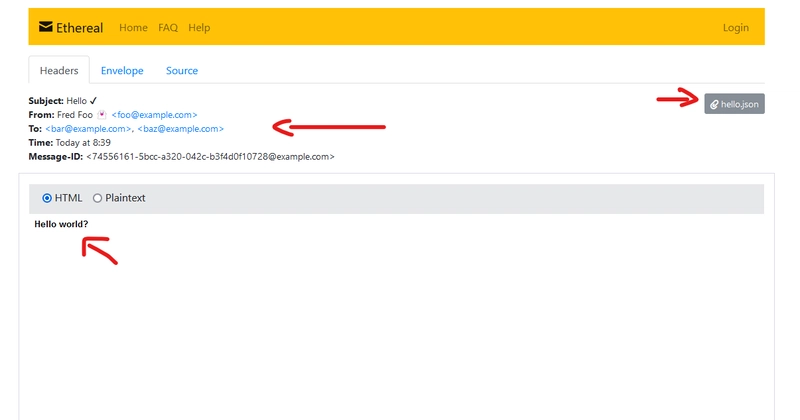
In technical contexts, “Ethereal Email” does not mean a dreamy message at all. It refers to a free email-catching service used for testing, where emails are accepted and stored for preview rather than delivered to real recipients. That distinction is operational, not poetic: it prevents test messages from reaching customers.
This is where “Ethereal Email Meaning Usage” can split in two. A developer may use “Ethereal Email” in a sentence that sounds like branding, while meaning infrastructure. Someone outside the workflow may hear it as tone.
The naming is part of the confusion. “Ethereal” sounds like mood language, yet here it is attached to a concrete function: simulate sending, then inspect the result.
Why testing email needs its own environment
Email is notoriously sensitive to small differences. Layout can break across clients. Images load differently. Links can be rewritten. A team that tests by sending messages to real inboxes is also, in a small way, taking a risk with real addresses and real deliverability reputation.
The Ethereal service positions itself as a safe staging space: configure an outbound service, send the message, and review what was produced without actual delivery. That is the kind of quiet utility that rarely enters public discussion until the name collides with ordinary language.
So “Ethereal Email Meaning Usage” becomes a translation problem in mixed teams. The marketers talk about “ethereal” as voice. The engineers talk about Ethereal as a sandbox. Meetings get briefly weird.
The preview URL and the “public link” wrinkle
One detail tends to surprise newcomers: the preview can be accessed via a URL provided after sending, and those message URLs are described as public and not requiring authentication. In practice, that makes the tool convenient for quick checks and screenshots.
But it also means the phrase “ethereal email” can show up in contexts where links are being passed around—tickets, chats, code comments. The language starts to travel. “Ethereal Email Meaning Usage” then takes on a documentary role: it becomes a tag for a record of what was sent in test.
This is not a scandal by itself; it is a reminder that even test tooling has sharing behaviors. Convenience has a footprint.
Short-lived storage and the logic of ephemerality
The tool’s FAQ notes that messages are stored for only a few hours before being deleted. That time limit fits the use case: quick verification, not archival. It also makes the name “Ethereal” feel oddly apt, even if that was not the intent.
This is the rare place where the poetic and the technical align. The email exists, can be viewed, and then vanishes. “Ethereal Email Meaning Usage” becomes literal: an email that is, by design, not meant to last.
In newsroom language, that maps to a familiar tension between recordkeeping and transience. Email feels permanent until a system is built to make it temporary.
Examples that clarify the technical sense
A developer might write: “Send the transactional template through Ethereal Email and check the rendering.” That is a workflow instruction, not a compliment. Another line might read: “The preview is in Ethereal; link attached.” Here “Ethereal” is a location.
Placed beside ordinary language, the sentences can mislead. The casual reader might think the writer is calling the message “ethereal,” as in delicate. This is where “Ethereal Email Meaning Usage” needs context to stay accurate.
The cleanest clue is capitalization and specificity. “Ethereal Email” used like a service name usually sits next to verbs like configure, send, preview, or test. The aesthetic meaning rarely does.
Where the phrase gets used
In workplace writing that avoids hard edges
In office environments, “ethereal email” often appears as a private descriptor, not something written in the email itself. Someone forwards a message and remarks on how it reads: light, floating, hard to pin down. It becomes commentary on a communication culture.
“Ethereal Email Meaning Usage” in this sense is about what the message refuses to do. No direct request. No named decision. No deadline. A mood is offered instead of an action.
That can be appropriate when a writer is de-escalating. It can also be dysfunctional when the situation demands clarity. The same adjective can disguise two very different judgments.
In creative communities and audience-building
Writers, artists, and small publishers often use email as a canvas. The note becomes part of the work: an ambient paragraph, a fragment, a link with minimal framing. In those circles, “ethereal” reads as intentional restraint.
What is being sent is not news but presence. “Ethereal Email Meaning Usage” becomes a way to justify not filling the space. The absence of a hard sell is the point.
Still, even here, the medium enforces its own reality. An email client frames the message inside an inbox built for tasks. The ethereal effect depends on contrast with everything else sitting nearby.
In marketing copy that borrows literary signals
Brand language regularly imports words from art criticism and music reviews. “Ethereal” is one of them. It suggests refinement without stating what is refined. It hints at luxury without naming price. When attached to email, it signals a campaign meant to feel less like a campaign.
That is why “Ethereal Email Meaning Usage” can show up in internal review notes. A team asks whether the email feels too “ethereal”—too floaty—when the product needs a clear call-to-action.
The word becomes a control knob. Turn it up, and the message feels like a whisper. Turn it down, and it starts to resemble the rest of the inbox.
In tech documentation and support threads
In developer spaces, the phrase is often unromantic. “Ethereal Email” is a testing dependency, mentioned alongside SMTP settings, ports, and credentials. The talk is about whether the message was accepted, how it renders, and where to view it.
But the name still does something. It causes the occasional double-take. “Ethereal Email Meaning Usage” then becomes an incidental education: people learn that “Ethereal” is not only an adjective but also a tool.
This is the kind of linguistic collision that usually resolves quietly. The teams that live in the tooling learn the proper noun. Everyone else keeps using the adjective. The phrase does double duty.
In security conversations, cautiously
“Ethereal” can sound like a way of making something feel harmless. That is why the label can raise eyebrows in security-minded rooms. Not because the word is suspicious, but because tone words can distract from risk.
A message described as ethereal may still contain a link, a file, or an instruction to log in. “Ethereal Email Meaning Usage” becomes relevant when a reader admits they were disarmed by style. The more atmospheric the writing, the less likely some people are to interrogate it.
This is not an argument against beauty in communication. It is a reminder that the inbox does not separate art from action. Everything arrives with the same affordances: click, download, reply.
Examples that show context doing the work
Consider a workplace line: “Circling back on this—your last note was oddly ethereal.” That is critique. Now a creative line: “An ethereal email for a rainy evening.” That is branding of mood. And then the technical: “Rendered in Ethereal Email; looks broken in Outlook.” That is tooling.
They look similar on the page. Context tells the reader what is happening. “Ethereal Email Meaning Usage” is, in practice, a test of whether the room shares the same vocabulary.
The phrase is also a small reminder that English does not keep neat borders between metaphor and product naming. The same word can mean atmosphere, and then mean infrastructure, without warning.
How “ethereal email” lands with readers
The psychological effect of lightness
Readers often report that an “ethereal” message feels easier to open. It does not look like a demand. There is less anticipatory stress in the first line. That is the upside of the tone: it lowers friction.
But lightness also lowers urgency. “Ethereal Email Meaning Usage” becomes a label for messages that get read, appreciated, and then left unanswered. Not out of malice. Out of uncertainty about what response is expected.
In practical terms, an ethereal email can be a luxury only when time is abundant. When timelines tighten, the same style can be interpreted as wasteful or unclear.
The record problem: what will be quoted later
Email doubles as evidence. People forward it. Lawyers request it. Managers cite it. That is why “ethereal” as a style can backfire. A message built on implication can become hard to defend when someone later asks what was actually agreed.
This is where “Ethereal Email Meaning Usage” becomes less about beauty and more about traceability. The words might be lovely, but do they hold up when removed from their moment? Can someone reading it cold understand what was decided?
The more a message depends on shared context, the more ethereal it feels. That can be fine inside a tight circle. It is brittle across distance.
The difference between softness and vagueness
Soft language is not automatically vague. A writer can be gentle and still be specific. The problem arises when the softness becomes a substitute for naming what is happening.
Readers tend to tolerate ethereal tone when stakes are low: appreciation, reflection, a simple update. They resent it when stakes are high: pay, policy, accountability. “Ethereal Email Meaning Usage” then becomes a critique of power, not prose.
The email that says “We’re exploring paths forward” can sound humane. It can also sound like a refusal to explain. The same line changes meaning depending on who has control.
When the aesthetic becomes a mask
In brand communication, “ethereal” can be used to make a message feel less commercial. Sometimes that is honest—an attempt to be less aggressive. Sometimes it is camouflage, designed to slip past skepticism.
Readers notice pattern. If every email is “a quiet note,” the quietness stops feeling quiet. “Ethereal Email Meaning Usage” becomes a way of naming that fatigue. The reader senses performance.
This is the point where ethereal tone starts to feel engineered. The intimacy reads as strategy. In that moment, the word “ethereal” flips from compliment to suspicion, without changing the sentence itself.
Examples that show reader reactions
A reader might reply to a friend: “That was an ethereal email—thank you.” The word there means care without pressure. Another reader might message a colleague: “What does this even mean?” That is the same label, inverted.
On the brand side, a subscriber might think: “This is pretty,” and still not click. On the internal side, an editor might note: “Too ethereal; needs a peg.” “Ethereal Email Meaning Usage” becomes a small professional shorthand for that decision.
None of these reactions are fixed. They are situational, tied to timing, trust, and the reader’s workload. The inbox is not a neutral gallery wall.
The unresolved question: can an email be ethereal and precise
In principle, yes. Some of the most effective messages are light in tone and heavy in clarity. They read clean, even kind, while still making the request. They use short sentences. They name the action. They do not hide behind mood.
The reason the phrase persists is that it points to a real tension. “Ethereal Email Meaning Usage” sits between two competing aims: to sound human and to leave an unambiguous record. Email asks writers to do both, often under time pressure.
That is why the conversation does not settle. The medium keeps forcing the same negotiation, again and again, one subject line at a time.
The public record resolves only part of what “Ethereal Email” means. In ordinary language, “ethereal” remains a flexible adjective—used to praise delicacy, critique vagueness, or describe a message that arrives without obvious demands, with dictionaries emphasizing its sense of intangibility and unusual delicacy. In technical work, Ethereal Email is also a named testing service with specific behaviors: it accepts mail, stores it briefly, and provides previews rather than delivery. Those two realities coexist, and the overlap is not a bug so much as a feature of how language moves between industries.
What cannot be cleanly resolved is intent. An ethereal email might be carefully written, or it might be carelessly unfinished. It might be an aesthetic choice, or it might be a way to avoid stating something directly. Context can clarify, but context is often missing when messages get forwarded, screenshotted, or read late.
So the phrase remains unstable. It keeps being useful precisely because it is not pinned down. As long as email serves both as a human note and a permanent record, “Ethereal Email Meaning Usage” will keep surfacing—sometimes as praise, sometimes as a complaint, and sometimes as the name of a tool that was never meant to sound poetic at all.



Leave a Comment