
Brat Generator: How It Works and Uses
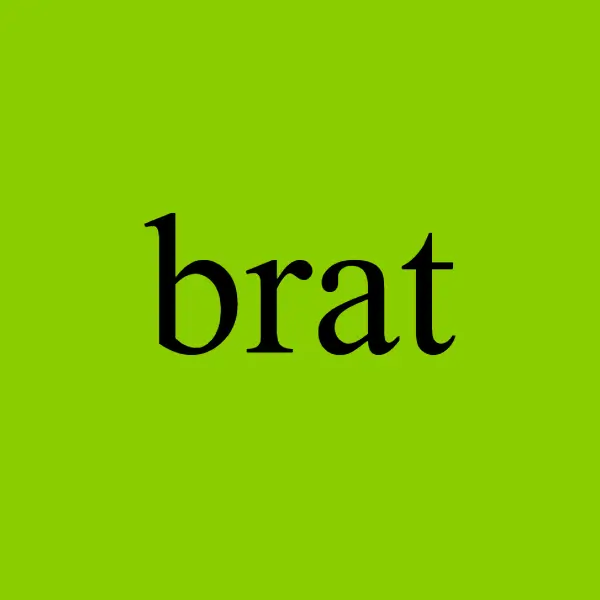
The latest attention around Brat Generator How It Works is less about a single product than a recognizable visual format that keeps resurfacing across pop-culture posts, fan art, and quick-turn graphics tied to Charli XCX’s “Brat” cover look. Several sites now offer a “Brat Generator” that turns a short phrase into a stark, album-cover-style image, often with a live preview and a save-as-image workflow.
The renewed chatter has also sharpened a practical question that rarely gets asked when a template goes viral: what is actually happening under the hood when a browser “generates” that image, and what, if anything, leaves the device. Some services present themselves as lightweight, low-friction tools that produce the graphic instantly, while separate software with the same “brat” name exists in academic and developer contexts and has nothing to do with pop visuals. Those overlaps are now part of the story, because the name is doing double duty in public view.
What “Brat Generator” means
A name used for multiple tools
In current use, “Brat Generator” is commonly applied to web pages that output a Charli XCX-inspired cover image from a user’s text input. On at least one such page, the interface prompts users to type words, view the “Brat Cover,” and save it via a screenshot-style workflow. The same label can also point to unrelated developer software, which complicates casual references when links get shared without context.
That collision is not theoretical. The phrase “brat” also identifies a long-running annotation platform in natural-language-processing work, described as a web-based tool for text-bound and relational annotations. The two uses share a name but not a function, audience, or typical distribution path.
The Charli XCX cover aesthetic as shorthand
Several Brat Generator sites explicitly frame their output as resembling the “Brat” album cover and its minimalist look. The promise is speed: type a phrase, see the result immediately, and capture it for reuse across platforms. In that sense, Brat Generator How It Works is mostly about template discipline—tight spacing, blunt color, and centered text—rather than a wide feature set.
What keeps it circulating is recognizability. The image reads at a glance even when stripped of extra design elements, which is why it adapts well to captions, parody, and brand-like posts that want to borrow the tone without quoting any lyrics.
The interface tells on the workflow
The simplest versions reveal their method in plain sight. One widely indexed implementation instructs users to type, scroll to view the cover, and take a screenshot to save. That phrasing matters because it suggests the page may not be creating a downloadable file through a complex pipeline at all; it may be presenting a rendered graphic in the browser and letting the user capture it.
Some pages also advertise background choices—often a green option and a white option—paired with short text centered in the frame. The constraints are the point. A generator like this is less an editor than a controlled output lane.
Confusion with “brat” the annotation tool
Separate from the meme-style pages, brat exists as an open-source “rapid annotation tool” adopted in NLP communities, with a web server model and an MIT license. It is designed for creating structured annotations over text, not for producing album-cover images. When someone says “brat generator” in a technical channel, they may be referring to that ecosystem rather than a pop template.
The overlap produces predictable misfires: wrong links, wrong expectations, and the sense that a visual meme tool is somehow connected to academic software. Publicly available descriptions do not suggest any direct connection between the two beyond the shared name.
Why the label keeps sticking
The branding logic is straightforward. “Brat Generator” is easy to remember, and the output is instantly legible, so the name travels with the image. Sites leaning into that label also tend to keep the action minimal—type, preview, capture—making it friendly to drive-by use.
Brat Generator How It Works becomes, in practice, a question of repetition at scale: the same visual recipe reproduced across domains and hosted in many places, with small differences in privacy posture, image export options, and how aggressively each site wraps the template in extra marketing language.
How the generator works
Browser rendering, not “AI art”
Most “Brat Generator” pages read like front-end renderers: the user types text, the page displays a live result, and the output looks like text placed on a flat background. The absence of complex controls is a clue. This is usually consistent with HTML/CSS layout or a canvas-based render rather than model-driven image synthesis.
That distinction matters for expectations. Brat Generator How It Works, in many cases, is closer to how a meme template works than how an AI image model works: it is assembling a graphic from simple primitives, not inventing new visual content from a prompt.
Real-time preview and event-driven updates
At least one prominent site advertises “real-time preview” and explicitly frames the experience as seeing the cover change as the user types. That implies the page is listening for input events and updating a text layer immediately. The “generator” label can sound heavier than what’s happening; the technical lift is often in layout and typography, not computation.
The visible behavior also shapes how people use it. A fast preview encourages short phrases, quick iteration, and a kind of performance—trying several variants until one looks right, then capturing the best version.
Background selection and constrained design
A recurring feature is the option to choose between two backgrounds—described as “iconic green” versus “deluxe white” on one site. That constraint functions like a preset. It keeps outputs consistent, and it also reduces the chance that a user can drift too far from the reference look.
Design constraints also simplify technical implementation. Fewer knobs mean fewer failure cases across devices, especially on mobile browsers where font rendering and scaling can behave unpredictably.
Export: screenshots, downloads, and what they imply
One implementation explicitly tells users to take a screenshot to save the result. That phrasing is revealing: it suggests the site may not be generating a file server-side, and it may not even be packaging a formal download in the browser. The “download” can be the operating system’s capture tool.
Where sites do provide a download button, it can still be client-side, using the browser to convert a canvas to an image file. Brat Generator How It Works often comes down to whether the output is a static element on the page or a canvas snapshot.
Privacy posture depends on the site
Because multiple domains host “Brat Generator” pages, privacy claims vary. One service, BratMake, presents its privacy policy as “designed with privacy in mind” and states it collects minimal information to provide the service. In search-preview text associated with that policy, BratMake also describes local processing and says it does not store creations.
Those statements—when present—shift the practical risk profile. But they are site-specific, and they do not automatically apply to every Brat Generator clone or similarly named page circulating on social platforms.
How it’s used in practice
A visual quote without quoting
The most common use is not archival; it’s conversational. The output works as a visual stand-in for a mood, a jab, or a label that would look flat as plain text. That’s why Brat Generator How It Works draws attention: the mechanism is simple, but the social meaning travels.
The template is also compact. A square image with centered text survives re-uploads, cropping, and compression better than many busier designs, so it stays readable after it has been reposted multiple times.
Fast-turnaround graphics for creators
For creators who publish often, a generator like this functions as a quick title card. Some versions describe themselves as tools for “social media presence” and “personal branding,” though the core output remains the same: a short phrase in a consistent style. The speed supports reactive posting when a phrase is still hot.
Brat Generator How It Works becomes a production question as much as a design one. If the output is captured by screenshot, it fits into a low-friction workflow that avoids editing software altogether.
Brand mimicry and the edge of legitimacy
The template’s recognizability creates a temptation for brand-like use. Some sites even include reminders about permissions for commercial purposes, underscoring that the visual is “inspired by” an existing album cover style. That caution may be easy to ignore, but it signals that the aesthetic is not neutral territory.
In practice, posts using the format can look official even when they aren’t. The cleaner the design, the more it borrows authority from professional album packaging, which can blur intent when the image is presented without context.
Political and campaign-adjacent borrowings
One Brat Generator site explicitly links the broader “brat summer” framing to U.S. political imagery and claims campaign-adjacent adoption of the aesthetic, presenting the generator as a way to create similar visuals. That is not the same as an official endorsement, and it should not be read as proof that any campaign controls these generator sites.
Still, the fact that such language appears on generator pages shows how quickly a pop template can be positioned as a political prop. Brat Generator How It Works, in that setting, is about replicating a look quickly enough to ride a news cycle.
Remix culture and endless minor variations
The output encourages remixing because the only variable is the phrase. That makes the format ideal for in-jokes and micro-communities: a private phrase can be dressed in public clothing. The repetition is the appeal.
This also explains why so many near-identical domains exist. When a format becomes familiar, hosting the generator is less about invention than about controlling a doorway—adding ads, collecting traffic, or wrapping the tool in additional “features” that don’t change the central output.
Risks, limits, and open questions
Copyright and “inspired by” language
At least one Brat Generator page warns users to ensure they have the right permissions for commercial use, even while describing the tool as free for personal use. That kind of language is cautious, but it also highlights the unresolved boundary: a style can be recognizable enough to raise questions even when the generator is only placing text on a colored background.
Brat Generator How It Works does not settle the rights question. The tool can be mechanically simple and still produce an image that feels closely tied to a specific piece of packaging, which is where disputes tend to start.
Data handling is not uniform across clones
BratMake frames its privacy policy around minimal collection and privacy-by-design language, and search-preview text linked to that policy describes local processing and no storage of creations. That is a strong claim when it’s true, because it suggests the text never needs to be uploaded to a server.
But the broader ecosystem is fragmented. A user moving between similarly named sites cannot assume identical data practices, especially when the generator is embedded among third-party scripts or analytics that are not obvious from the interface.
Security and impersonation problems
The cleaner a template, the easier it is to weaponize. A short, declarative phrase on a stark background can be screenshotted, reposted, and attributed to the wrong person with minimal effort. The generator doesn’t create that risk, but it lowers the cost.
This is where Brat Generator How It Works intersects with platform enforcement. A format optimized for rapid reproduction also makes it easier to circulate altered statements, especially when the audience expects the image to be a “real” artifact rather than a quick render.
The technical floor is low, the copies are endless
The “brat” annotation tool in NLP is mature software with documented architecture and licensing, positioned as a web-based system for annotation work. The meme-style Brat Generator pages, by contrast, can be lightweight enough to duplicate quickly. That imbalance encourages an ecosystem of look-alike implementations where branding and domain choice do more work than engineering.
Brat Generator How It Works, then, depends on which version is being discussed. Some are hobby projects, some are polished landing pages, and some may exist mainly as wrappers for ad inventory.
What remains unverified in the public record
Even when a site describes its own practices, there is a limit to what an outside user can verify without inspecting code or network traffic. BratMake’s public-facing privacy language, including the “last updated” framing and claims summarized in search previews, provides a posture but not a complete audit trail. The same applies to sites that describe themselves as simply transforming input text into an image.
The public record is also noisy because “brat” is shared terminology. The annotation tool’s documentation and licensing are clear in developer contexts, but it is not the cultural engine behind the album-cover generator trend.
The renewed interest around Brat Generator How It Works is unlikely to fade cleanly, because it sits at the intersection of pop packaging, meme speed, and low-cost tooling. What can be said with confidence is narrow: multiple sites offer a fast, constrained way to render short text into a “Brat”-styled image, and at least some of them emphasize in-browser preview and low-friction saving. Beyond that, users are left with a patchwork of privacy claims, uneven export options, and differing degrees of caution about commercial reuse. None of those variables are visible in the finished graphic once it’s been reposted, which is part of why the format travels so easily.
What remains unsettled is responsibility. A template that looks official can be used casually, competitively, or deceptively, and the same clean design that makes it funny also makes it plausible. Meanwhile, the “brat” name continues to point to unrelated software in technical circles, muddying attribution and making it harder to speak precisely about which tool did what. The next phase may not be a new feature at all, but clearer labeling—by platforms, by creators, or by the sites themselves—about where an image came from and what its reuse implies. Until then, the generator will keep doing what it has always done: producing a simple artifact that invites everyone else to decide what it means.



Leave a Comment